Daily Journal Recommendations for Writers Who Actually Write
I have been keeping a journal for over thirty years, and I have filled more notebooks than I can count. Some of them were terrible. Some of them became trusted companions. The difference between a good journal and a great one comes down to paper feel, binding durability, and page layout. After decades of testing everything from cheap composition books to hand-stitched leather notebooks, I have settled on a short list of daily journal recommendations that work for real writing sessions, not just Instagram flat-lays.
When I talk about daily journal recommendations, I mean the notebooks that survive being shoved into a bag, written on at odd angles, and still look presentable after months of use. A journal that works for daily writing has to perform under real conditions. It has to handle fountain pen ink without bleeding. It has to lie flat when you open it. And it has to feel good in your hand, because you will spend hundreds of hours holding it. Here is what I have learned, notebook by notebook.
Paper Quality Makes or Breaks the Habit
Paper is the foundation of any good journal. If the paper ghosts or bleeds, you will stop wanting to write on both sides. If it feels rough, your pen will drag. If it is too slick, the ink takes forever to dry. I have found that Tomoe River Paper is the gold standard for fountain pen users. It is thin enough that a 400-page notebook stays slim, but it handles wet ink without bleeding. Nanami Paper uses Tomoe River and binds it into softcover notebooks that are a pleasure to write in. The only downside is show-through on the reverse side, but that is a trade-off you learn to accept.
For those who prefer a thicker, more tactile page, Rhodia and Clairfontaine make exceptional notebooks. Their coated paper is smooth and bright white, which makes ink pop. I use Rhodia No. 16 pads for drafting letters and quick morning pages. The paper can handle a Lamy Safari with a broad nib and Diamine ink without any trouble. Clairfontaine bound notebooks are excellent for daily journal recommendations because the paper is consistent from cover to cover. You never get a bad batch.

Notebooks Built for the Long Haul
Leuchtturm1917 is probably the best-known brand among serious journal keepers. Their hardcover notebooks have numbered pages, a table of contents, and a back pocket for loose papers. The paper is good for most gel and ballpoint pens, and it handles moderate fountain pen use. I have used Leuchtturm1917 for several years of daily writing, and I appreciate how the lie-flat binding improves over time. The only issue is that the paper is not as fountain-pen-friendly as Tomoe River or Rhodia. If you use a Pilot G2 or a fine-nib fountain pen, you will be fine. Heavy ink users should test before committing.
Moleskine is the brand that many people start with. Their classic black notebooks are everywhere, and they have a certain cultural weight. But I have to be honest: Moleskine paper quality has declined over the years. The paper is thin, and it ghosts badly with anything wetter than a dry ballpoint. I still keep a Moleskine for quick notes on the go because the size fits most bags, but I do not recommend it for daily journal recommendations if you use fountain pens. For a similar aesthetic with better paper, try Paperblanks or Peter Pauper Press. They offer ornate covers and decent paper at a lower price.
Flexible Systems for Changing Needs
Some writers prefer a modular system. The Traveler's Notebook system from Japan is a leather cover that holds multiple inserts. You can carry a grid insert for daily journaling, a blank insert for sketches, and a lined insert for longer entries. I have been using a Traveler's Notebook for about two years, and I love being able to swap out inserts without carrying a whole different notebook. The standard inserts use a paper that works well with fountain pens and the Pilot G2. You can also buy Tomoe River refills from Etsy sellers if you want even better paper.
Hobonichi Techo is another Japanese import that has a cult following. The Hobonichi Techo uses Tomoe River Paper and comes in a dated daily format. It is a planner and a journal in one. I use the A6 size for daily gratitude entries and short reflections. The paper is so thin that you can see the next page's grid through the page, but the writing experience is unmatched. The only catch is that the Hobonichi Techo is a dated notebook, so if you miss a day, you see a blank page. Some people love the structure. Others find it stressful.
American Classics and Modern Favorites
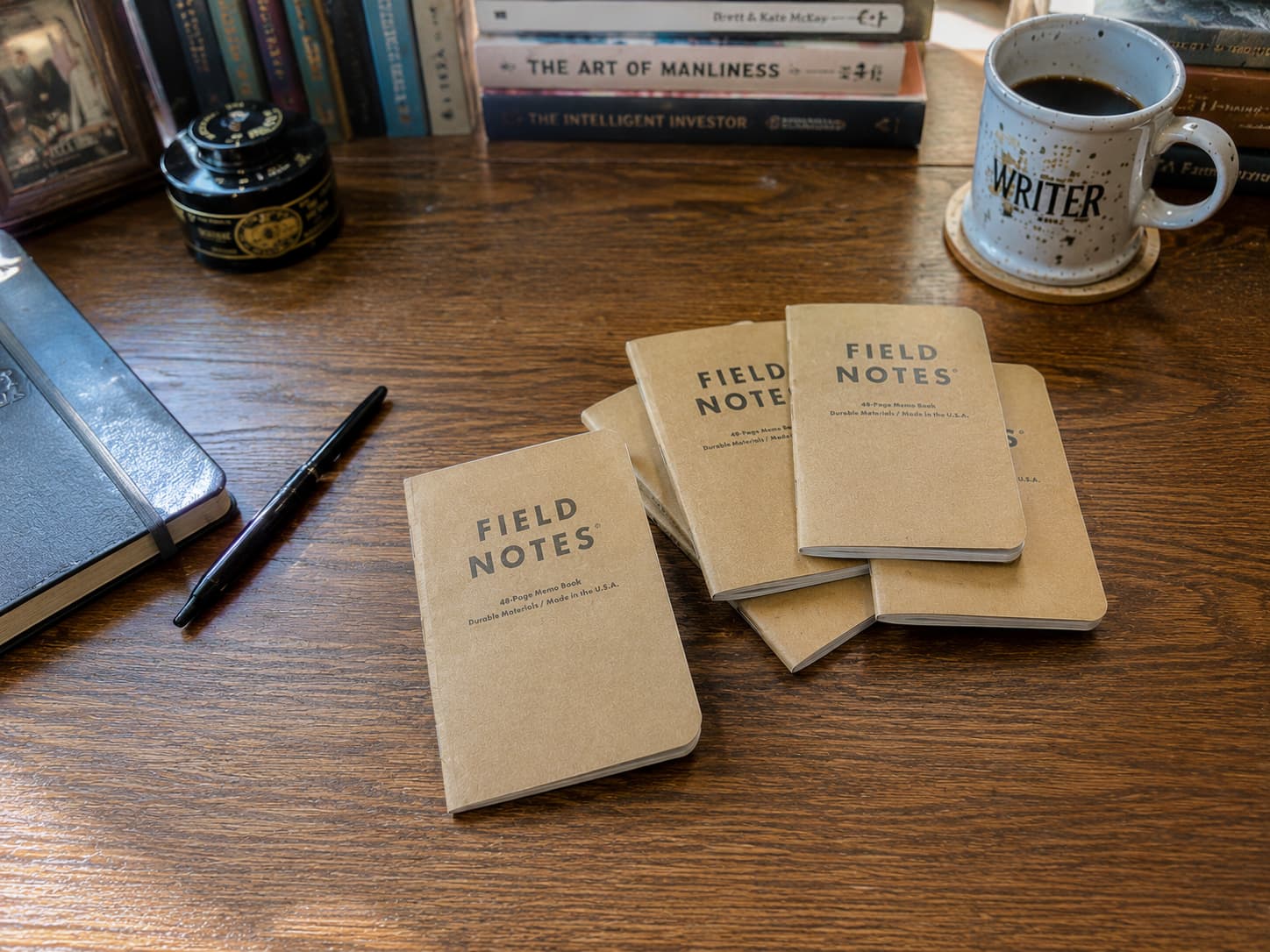
Field Notes notebooks are small, affordable, and rugged. They come in three-packs with different cover designs, and they are built to be carried in a pocket. I use Field Notes for lists, sketches, and quick ideas that would otherwise get lost. The paper is not great for fountain pens, but it handles a Pilot G2 or a pencil beautifully. If you want a daily journal recommendation that fits in your back pocket, Field Notes is a solid choice. Just keep a ballpoint or a fine-tip gel pen handy.
Baron Fig makes hardcover notebooks with a minimalist design and a lay-flat binding. The paper is smooth and takes fountain pen ink well, though it ghosts a little with heavy applications. I have a Baron Fig notebook that I use for morning pages, and it has held up well to daily use. The elastic band closure is convenient, and the bookmark ribbon is a nice touch. Baron Fig also offers dot grid, lined, and blank options, so you can pick what suits your handwriting style.
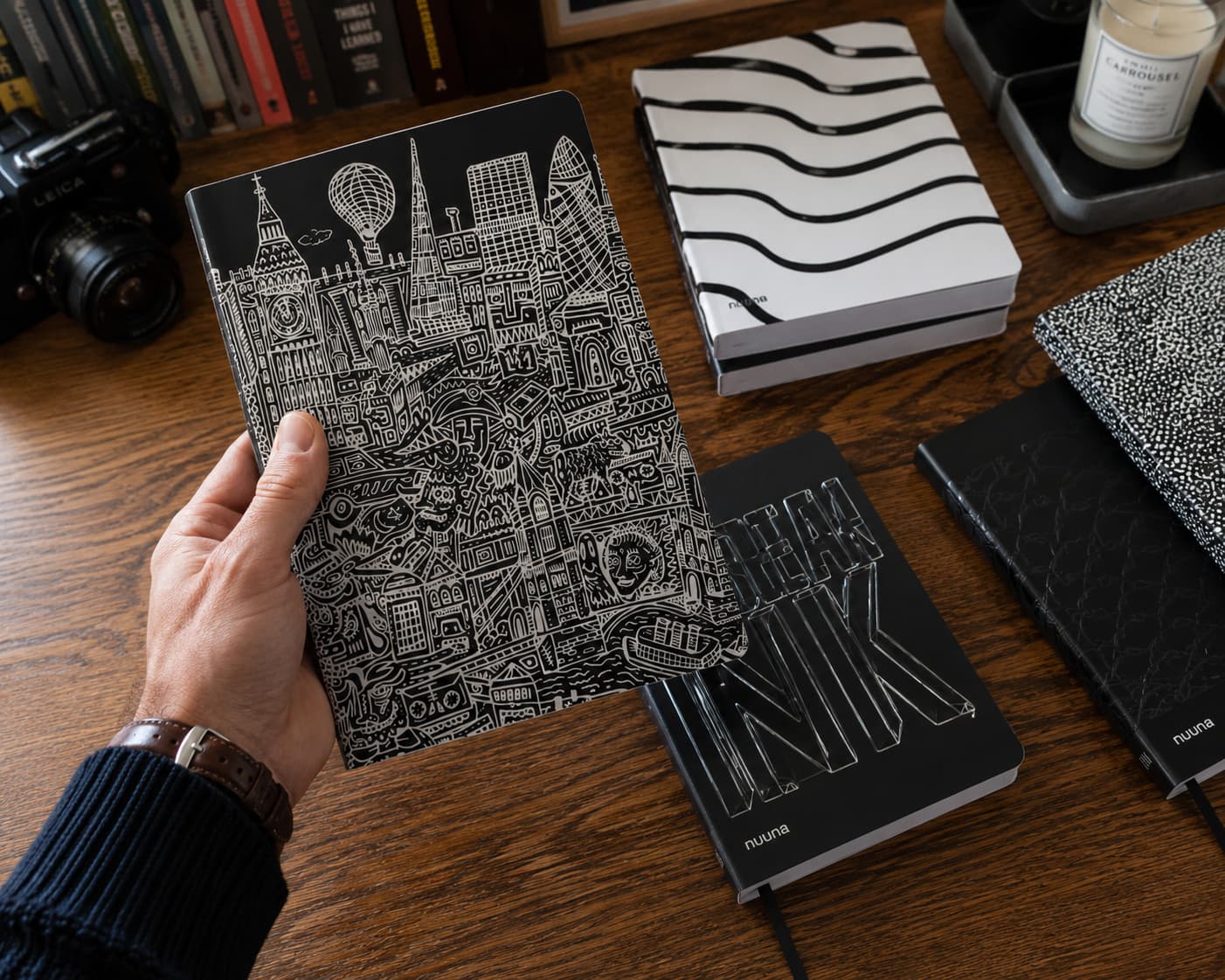
Archer & Olive is a newer brand that focuses on thick paper for bullet journaling. Their notebooks have 120 gsm paper that can handle watercolor and heavy ink without bleeding. The pages are sewn and the covers are beautiful. If you like to mix writing with drawing or lettering, Archer & Olive is a strong contender. I use one for creative journal entries where I want to add washi tape and stickers. The paper is so thick that the notebook is heavier than most, but the writing surface is satisfyingly solid.
Eco-Friendly and Unusual Options
Dingbats makes notebooks from sustainable materials, including tree-free paper. Their covers are made from vegan leather, and the paper is cream-colored and fountain-pen-friendly. I tested a Dingbats notebook last year and was impressed by how well it handled a Lamy Safari with Noodler's ink. The pages are numbered, and there is a pocket in the back. It is a good alternative to Leuchtturm1917 for writers who want a similar feature set with a smaller environmental footprint.
Exacompta is a French brand that makes sewn notebooks with high-quality paper. They are less common in the US, but they deserve attention. Exacompta's paper is smooth and bright, and their notebooks are affordable. I picked up a few Exacompta notebooks during a trip to Paris, and they have become favorites for travel journaling. The paper holds up to fountain pens and the Pilot G2 equally well.
Muji notebooks are simple, cheap, and surprisingly good. They come in packs of five for a few dollars, and the paper is decent for the price. I keep a stack of Muji notebooks for brainstorming and rough drafts. They are not going to win any awards for durability, but they are perfect for writers who go through notebooks quickly. If you want to try a new layout or a different pen without worrying about wasting an expensive notebook, Muji is the way to go.
Reusable and Digital Alternatives
Rocketbook makes notebooks that can be wiped clean with a damp cloth. You write with a Pilot Frixion pen, scan the pages with the Rocketbook app, and then microwave the notebook to erase the ink. I was skeptical at first, but I have found Rocketbook useful for meeting notes and daily task lists. The paper is smooth and the app can send your scans to cloud services. It is not the same experience as writing in a fine paper journal, but for some daily journal recommendations, the ability to reuse the notebook is worth considering. The pages have a slight texture that feels good under a pen, and the spiral-bound version lies flat.
At the end of the day, the best daily journal recommendations are the ones that make you want to write. I keep multiple notebooks for different purposes: a Hobonichi Techo for morning reflections, a Traveler's Notebook for daily notes, a Field Notes for pocket ideas, and a Leuchtturm1917 for longer entries. That might sound like a lot, but each notebook serves a distinct role. If you are just starting out, pick one notebook that matches your pen and your writing style, and commit to filling it. The habit matters more than the brand.
I also recommend trying different paper weights and ruling styles. Grid paper works well for sketching and writing. Dot grid gives you structure without lines. Lined paper is traditional and reliable. Blank paper gives you freedom but can be hard to write straight on. Most of the notebooks I mentioned come in multiple ruling options. Test a few and see what feels natural. Your handwriting will thank you.
One final thought: do not be afraid to move on from a notebook that does not work. I have abandoned Moleskine notebooks halfway through because the paper annoyed me. I have given away Archer & Olive notebooks because the thickness felt excessive for my daily writing. The right journal is out there. These daily journal recommendations should give you a solid starting point. Pick one, start writing, and let the notebook earn its place in your bag.
Corrections
Spot something wrong? Send it to the desk and it gets fixed in the open.